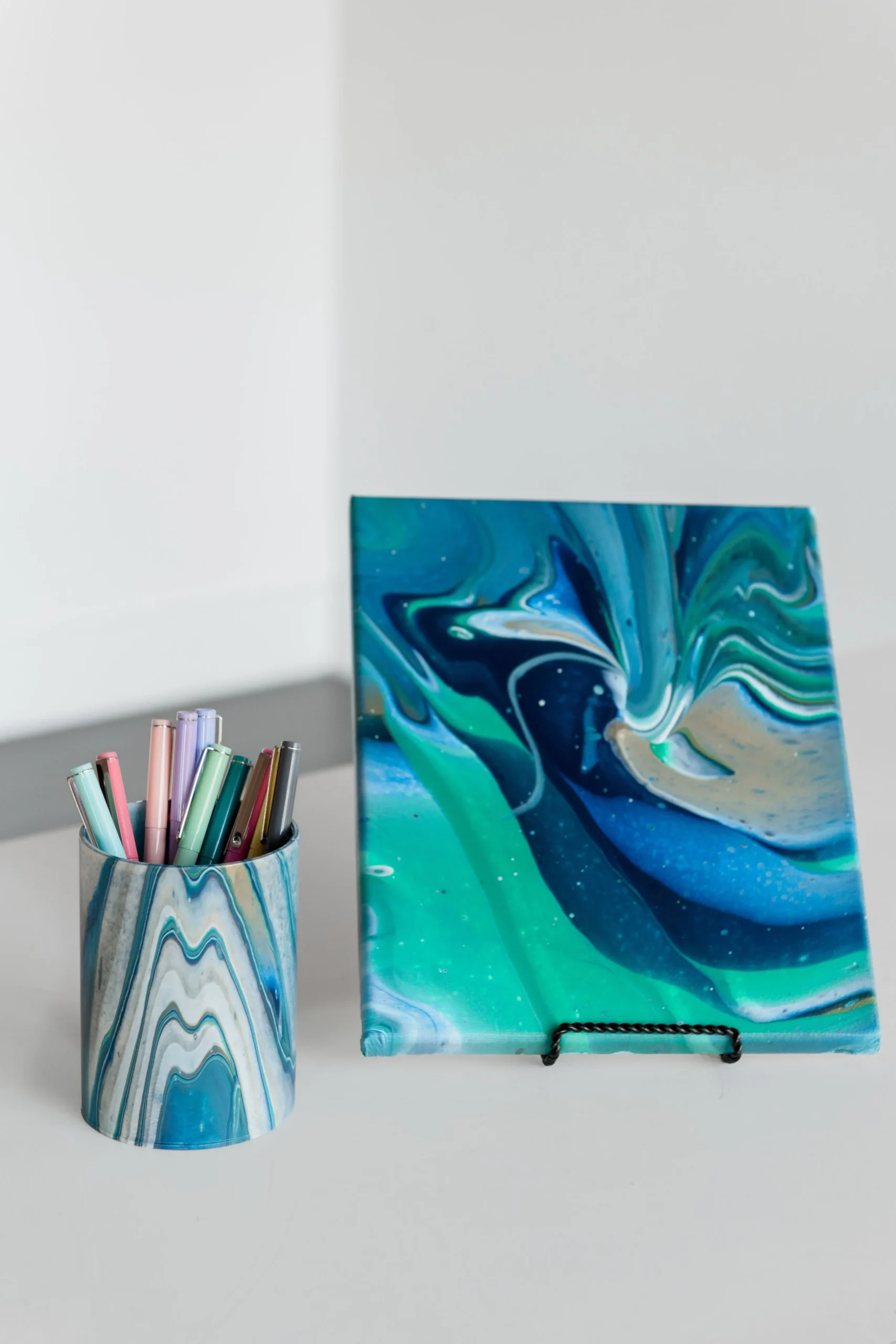
Discovering the Magic of acrylic pour painting
If you’ve ever dreamed of creating beautiful artwork without needing advanced drawing skills, you’re going to fall in love with fluid art. The world of acrylic pour painting invites both beginners and seasoned artists to explore colour, movement, and imagination. It’s a creative escape where paint flows freely, and every canvas becomes a one of a kind masterpiece.
Acrylic pour art blends science and creativity, using paint density, pouring mediums, and techniques to make mesmerizing patterns. The thrill comes from the unpredictability; no two pours are ever the same, making every finished canvas a unique work of art. Whether you’re looking for a new hobby, a stress relief activity, or a way to express your personality, this style of painting is the perfect gateway into nontraditional art.
Why Acrylic Pouring Captivates So Many Artists
Acrylic pouring is unlike any other form of painting because it replaces precise brush strokes with flowing, organic movement. Instead of painting on the canvas, you pour onto it, allowing gravity and the natural behaviour of liquids to dictate the final design. Many artists find this process deeply meditative, as watching colours swirl, merge, and separate creates a calming and almost hypnotic effect.
Part of its universal appeal is accessibility. You don’t need years of formal training or specialized tools to start. A basic setup of acrylic paints, a pouring medium, and a canvas is enough to ignite creativity. With time, experimentation opens the door to endless possibilities, from soft cosmic blends to dramatic, high contrast cells. The unpredictability ensures that every creation is completely personal and visually stunning.
Mastering the Basics of acrylic pour painting
For beginners, understanding foundational techniques provides clarity and confidence before attempting more complex pours. One of the most approachable methods is the dirty pour, where multiple colors are layered in a single cup and poured together, creating surprising blends as the paint spreads across the canvas.
Another popular technique is the flip cup method, where layered paints in a cup are flipped onto the canvas and lifted, causing the paint to burst outward in a spectacular display. The swipe method involves gently dragging a tool across the surface, allowing colors to flow and form smooth transitions and intricate patterns. For a more delicate approach, the Dutch pour uses air, such as a hairdryer or straw, to push paint across the canvas, producing soft petals and dynamic details.
The key to success in all these techniques is experimentation. Each pour is a learning experience that teaches how paint consistency, movement, and layering affect the final outcome. With practice, you’ll develop your own style and a better sense of how to manipulate the fluid dynamics of your paints.
Tips for Creating Stunning Pours
Consistency is everything in acrylic pouring. Paint that is too thick will resist movement, while overly thin paint may mix too much and lose vibrancy. Achieving the ideal honey like flow ensures the colors spread smoothly and create beautiful patterns. Using a high quality pouring medium is equally important, as it helps the paint flow evenly, prevents cracking, and enhances the separation of colors for stunning effects.
Protecting your workspace is essential because pouring can be messy. Laying down plastic or a silicone mat ensures that cleanup is easy, allowing you to focus on the joy of creation rather than worrying about spills. Finally, patience is key. Most acrylic pours require at least 24 to 48 hours to dry completely, and rushing the process can cause imperfections. Allowing your canvas to settle ensures that your colors remain vibrant and the textures stay intact.
Conclusion: Begin Your Fluid Art Adventure
Acrylic pouring is far more than paint on a canvas it’s an invitation to explore creativity, curiosity, and freedom. Every pour teaches something new, every swirl feels like a small moment of magic, and every finished piece tells a story of color, movement, and expression. This art form doesn’t demand perfection; instead, it celebrates spontaneity and personal expression.